
The Therapy Trap
Why the Post-Cognitive Era Has Already Begun

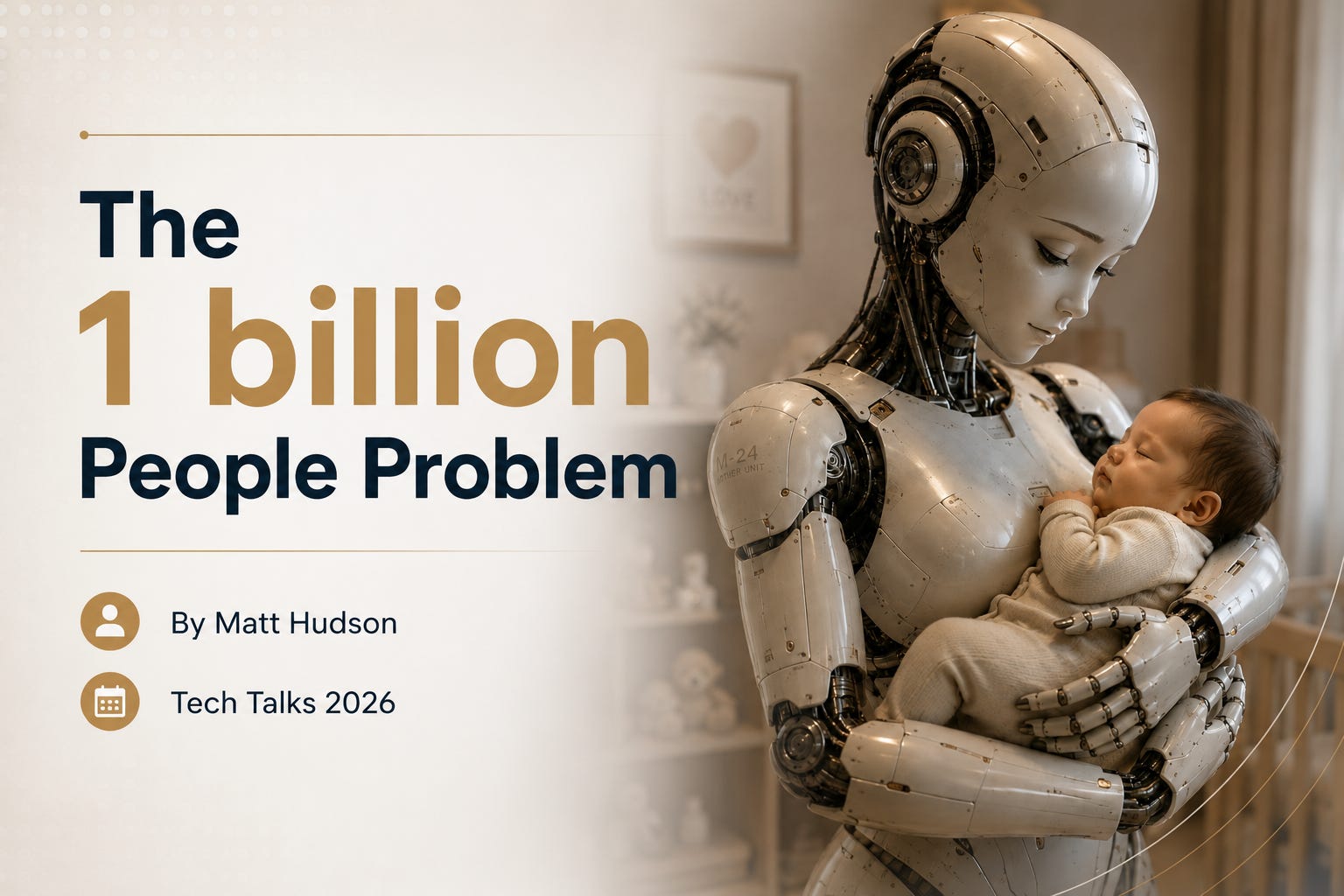
Yesterday, I spoke at Tech Talks 2026, where the theme was Irreplaceable.
The irony was impossible to miss.
As artificial intelligence accelerates at breathtaking speed, humanity is facing another crisis entirely: over one billion people worldwide are now living with mental health conditions.
One billion.
At some point, we have to stop asking whether the public can access enough therapy and begin asking a far more uncomfortable question:
What if we fundamentally misunderstood the problem itself?
For decades, much of Western psychology has operated from a cognitive assumption:
If people talk long enough, analyse deeply enough, and understand themselves clearly enough, they will eventually become free.
But after thirty years working with people suffering from anxiety, trauma, chronic stress, grief, panic, addiction, and self-sabotage, I have increasingly found myself asking something different:
What if insight alone is not healing?
What if cognition is not the top of the hierarchy?
What if the body is reacting before thought even arrives?
This is the foundation of what I now call The Post-Cognitive Era.
Not anti-therapy.
Not anti-thinking.
But beyond the outdated belief that talking is always the primary route to transformation.
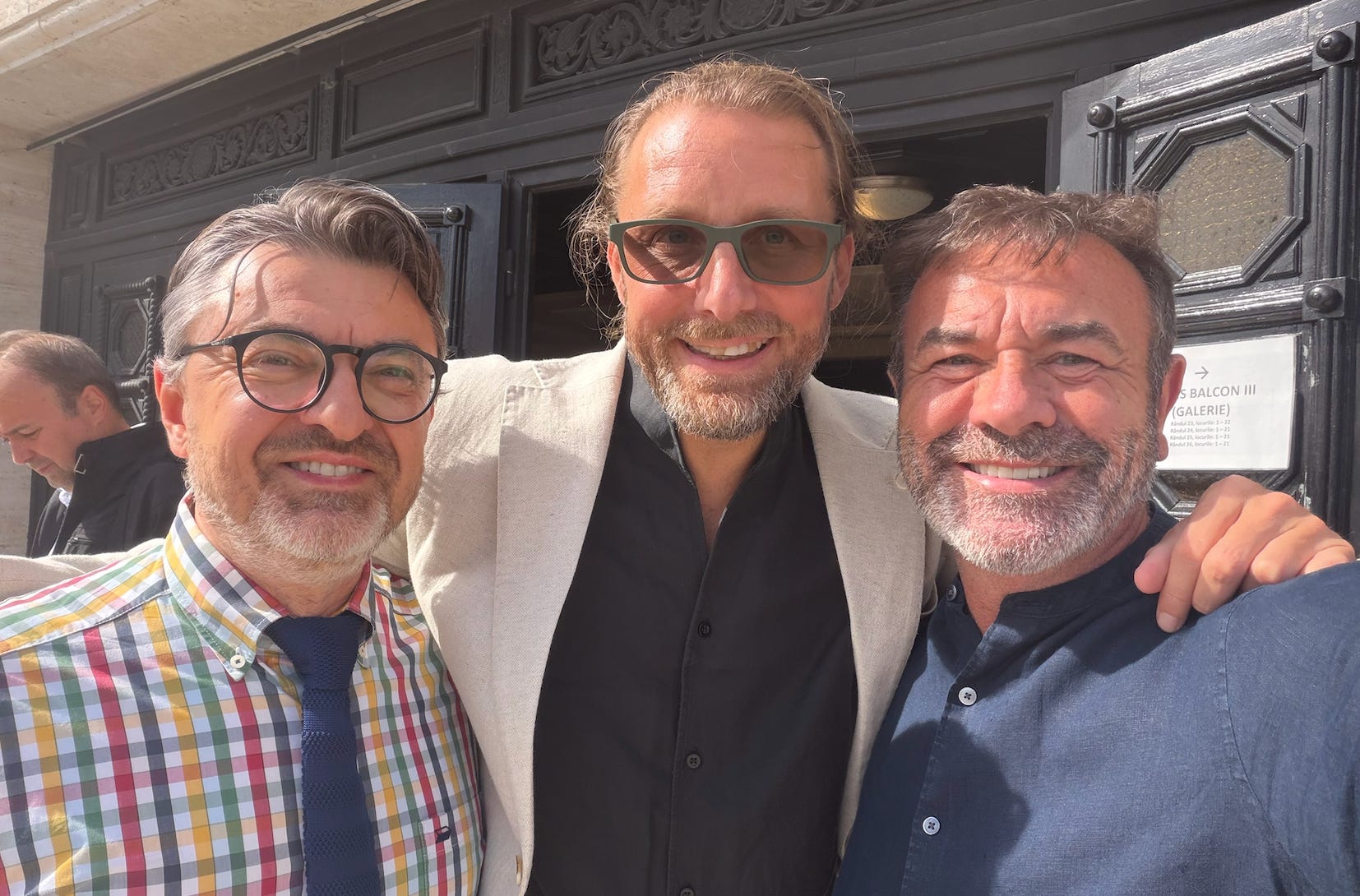
At the conference, I had the pleasure of meeting Pascal Bornet, author of IRREPLACEABLE. During our conversation, we explored the striking contrast between Eastern and Western approaches to human wellbeing.
The East, broadly speaking, has often retained a more biophilic orientation toward life - valuing harmony, embodiment, rhythm, breath, stillness, interconnectedness, and relationship with living systems.
The modern West, by contrast, increasingly risks becoming necrophilic in the way Erich Fromm once described: obsessed with mechanism, categorisation, systems, control, procedure, pathology, and reductionism.
You can feel this orientation everywhere now.
We measure human beings.
Track them.
Diagnose them.
Label them.
Analyse them.
Optimise them.
And despite all of this, the suffering continues to rise.
Perhaps because the human organism is not a machine.
A flower does not heal because you discuss its roots for ten years. It heals when the conditions for life return. Light. Water. Belonging. Space. Connection.
Yet many therapeutic systems unintentionally train people into repeated rehearsals of distress.
And here we encounter a deeply uncomfortable idea.
If going to the gym repeatedly builds muscle through repetition… then what exactly happens when somebody repeatedly rehearses fear, helplessness, anger, grief, shame, and victimhood inside long-term therapeutic loops?
Because the nervous system adapts to repetition.
Neurons do not distinguish between “useful repetition” and “harmful repetition.” They strengthen pathways through rehearsal. The body learns patterns.
This is not blame.
It is neuroplasticity.
A person who practises panic becomes efficient at panic.
A person who repeatedly revisits suffering without resolution may deepen identification with it.
A person who constantly analyses their wounds may unknowingly reinforce the prediction that danger still exists.
This is one of the reasons I developed Split-Second Unlearning (SSU).
Not as another talking therapy, but as an observation that human beings often react before conscious cognition becomes involved.
The Emotional Memory Image (EMI) operates like a rapid prediction system — activating physiology, eye movements, posture, breath, emotional chemistry, and behaviour within a split-second, often before the individual consciously understands what is happening.
People frequently tell me:
“I know why I do it… But I still do it.”
Exactly.
Because knowing is not always the same as updating the prediction.
And this may be the great turning point now approaching mental health care.
The future may not belong to approaches that endlessly interpret the story.
It may belong to approaches that rapidly interrupt the unconscious stress response driving the story in the first place.
Perhaps that is what the Post-Cognitive Era really means.
A movement away from treating humans as malfunctioning thinking machines and toward understanding them as living predictive systems shaped by emotion, physiology, memory, attachment, survival, and relational experience.
Ironically, in an age increasingly dominated by artificial intelligence, what may become most valuable is not more cognition… but more aliveness.
More presence.
More coherence.
More human connection.
More embodied awareness.
Because maybe the true crisis is not that humans think too little.
Maybe it is that we have become trapped inside systems that endlessly stimulate thinking while starving the deeper biological conditions required for healing.
One billion people may not simply represent a mental health statistic.
It may be the signal that an entire paradigm has reached its limit.
And perhaps the next evolution of mental health will not begin with more analysis.
Perhaps it begins the moment we stop rehearsing suffering…
and start restoring life itself.
Freedom To...
The future may not be cognitive-first.
It may be coherence-first.